
Two Nature Physics papers report autonomous quantum error correction that beats break-even without syndrome measurement or feedback. The gains are modest, 18 per cent in one case, and they protect one logical qubit, not a processor.
In 2016 a Yale team reported that it had, for the first time, kept a quantum bit alive for longer by correcting its errors than the best uncorrected qubit on the same device could manage. The corrected lifetime was 320 microseconds, about 10 per cent better than the best physical alternative. That crossing point is called break-even. Yale did it by repeatedly measuring the qubit’s parity and feeding the result back in real time.
Ten years on, Nature Physics has published two further break-even results, in different hardware, that dispense with the measuring and feeding back. One, from a group centred on Fuzhou University and the Hefei, Shenzhen and Southern University of Science and Technology laboratories, went online on 16 November 2026.
Why it matters
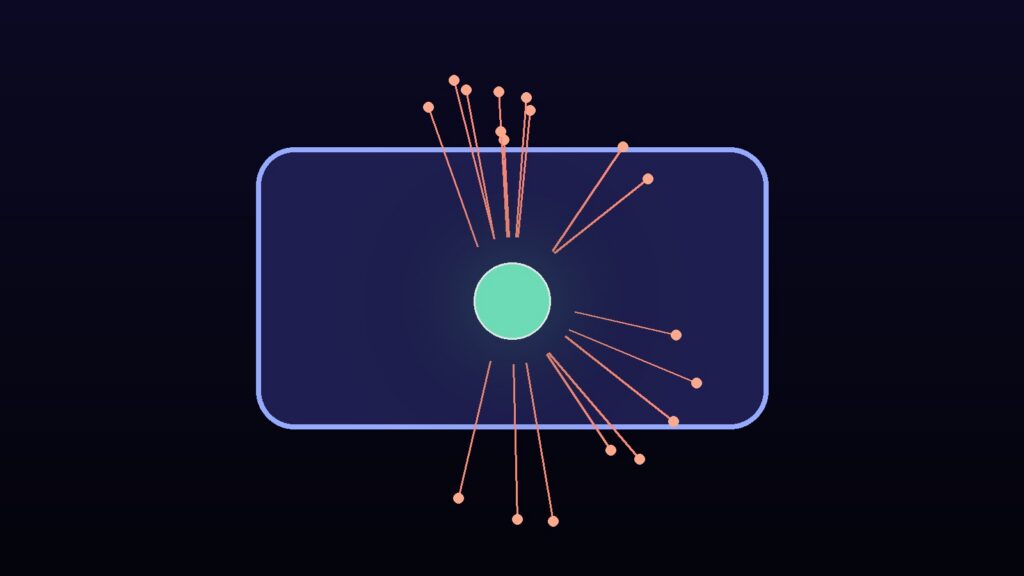
Quantum computers need error correction to run long calculations. The usual approach measures an error syndrome, then applies a correction, which costs hardware, time and extra qubits. Autonomous error correction instead uses engineered dissipation to remove the error entropy by itself. The Fuzhou paper says reaching break-even this way has been challenging and is a prerequisite for practical machines.
How it works
In the first paper, Zhongchu Ni, Ling Hu, Yanyan Cai and colleagues encode a photonic logical qubit in a superconducting microwave cavity and protect it against photon loss with engineered dissipation. The logical qubit lasts about 2.0 milliseconds, 18 per cent longer than the best physical qubit in the system. They also used the protocol to measure a small frequency shift with a metrological gain of 6.3 decibels relative to the most robust Fock-state superposition, which hints at sensing uses. Secondary coverage of the paper reports the corrected qubit lived 3.3 times longer than an uncorrected one with the same code and 15 times longer than the device’s transmon.
The second paper, online since 23 October 2026 from the University of Science and Technology of China and Zhejiang University, uses a single trapped ion. It encodes a logical qubit in several internal spin states, transfers error entropy into motion using engineered spin-motion coupling and dissipates it by sympathetic cooling with an ancilla ion. The authors report passing break-even under normal conditions and with injected magnetic noise. Separately, trade coverage describes a third superconducting-cavity team that reached 1,627 microseconds, 4 per cent above its best physical qubit; we did not review that paper directly.
What the evidence does and does not show
These are laboratory measurements, reported by the groups themselves in a peer-reviewed journal. Break-even is a relative benchmark within one device, not an absolute record, and an 18 per cent gain is small. Measurement has not vanished from the experiments; readout and tomography were still used to evaluate the result, and only the correction loop is autonomous. Both demonstrations protect a single logical qubit. Nothing here shows two-qubit gates, scaling or fault tolerance. We read the abstracts, metadata and secondary coverage, not the full papers.
Winners, losers, money and people
Hardware-efficient schemes would benefit developers of bosonic and trapped-ion platforms, since each logical qubit would need less control electronics. Rivals betting on surface codes with large qubit counts would not lose from this directly, because the demonstrations are far from that scale. The metrological result could also interest makers of quantum sensors.
The Fuzhou author list ends with Yuan Xu and Dapeng Yu. Funding disclosures cite the National Natural Science Foundation of China, China’s national Quantum Science and Technology Major Project, the Guangdong foundation and the Shenzhen Science and Technology Program. Affiliations include Hefei National Laboratory and the International Quantum Academy in Shenzhen.
Listing check
No company is a party to either paper. The universities, Hefei National Laboratory and the International Quantum Academy are not listed companies. Listed quantum-computing firms are context only and are not connected to these papers, so no listing or Trading 212 check applies. Patent publication searches were not completed on this run.