
Sichuan University researchers report in Nature Communications an ingestible capsule that powers itself with a zinc cell and converts ethanol in the gut before it reaches the blood, lowering blood alcohol by about 58 to 68 per cent in intoxicated rats.
Most scientific papers end with a list of funders. One published on 18 November 2026 in Nature Communications ends with a dedication: to the 120th anniversary of Sichuan Agricultural University and to its Department of Tea Science. It is a fitting nod for a device built around a plant polyphenol, and for a team whose affiliations at Sichuan University in Chengdu include the College of Biomass Science and Engineering and a national engineering laboratory for clean leather manufacture, the industry that has used plant tannins for centuries.
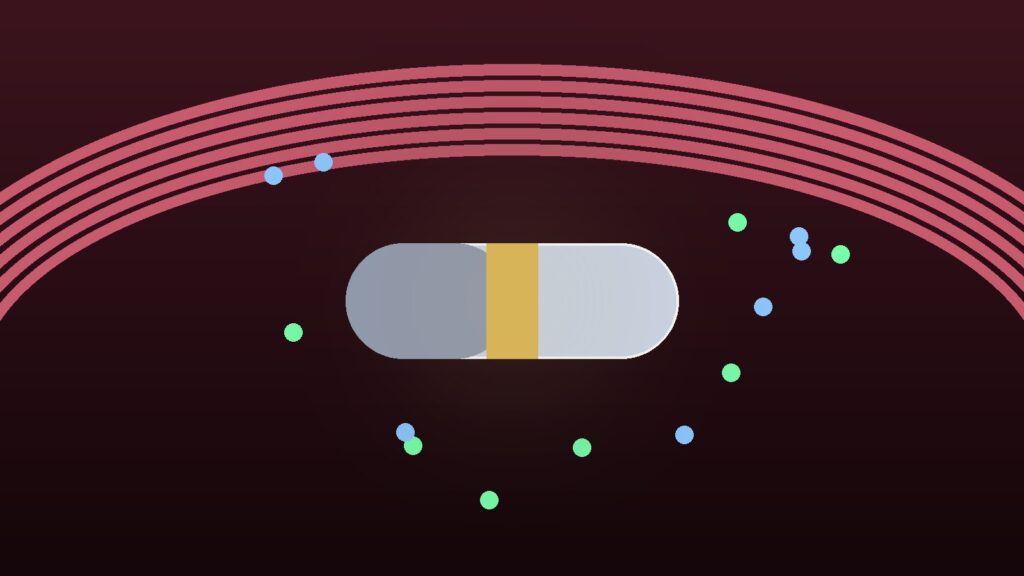
What the group, led by corresponding authors Gonghua Hong, Hao Wu and Junling Guo, with a collaborator at the University of British Columbia, has built is unusual: a swallowable capsule that intercepts alcohol in the intestine and converts it before the body absorbs it, powered by its own battery chemistry.
The problem it targets
Alcohol harms are a leading cause of death and disease worldwide. The liver clears ethanol through enzymes that saturate, so once someone drinks faster than those enzymes can work, blood alcohol climbs, and the gut absorbs ethanol quickly. Hospital treatment for severe intoxication is largely supportive. The authors argue that ingestible electronics have so far focused on monitoring and nerve stimulation, and that devices that actively destroy a toxin where it is absorbed are underdeveloped.
How the capsule works
The capsule is a galvanic cell, in effect a tiny battery that runs on the body’s own fluids. A zinc component supplies the electrical drive, so no external power source or wiring is needed. The working surface pairs gold with mesocrystals of manganese and ellagic acid, a polyphenol found in many fruits and nuts, assembled in a way the authors describe as biomimetic. When ethanol molecules in the gut contact that interface, they are converted towards acetate, the same end product the liver produces. The paper calls this a host-independent auxiliary clearance pathway: it adds to the body’s own metabolism rather than relying on it.
What was measured
The evidence so far comes from rats. In a model of acute intoxication, giving the capsule before alcohol reduced blood ethanol concentration by about 58 to 68 per cent across the 0.5 to 6 hour observation window. Treated animals spent less time unable to right themselves, a standard measure of intoxication in rodents, and showed fewer alcohol-induced behavioural deficits and less liver injury. In laboratory tests, a representative mixture of other biomolecules caused minimal electrochemical interference, suggesting the reaction is reasonably selective for ethanol.
The authors are careful about the limits. They describe the work as a preclinical platform and say future work needs scale-adjusted pharmacokinetics, studies of how the capsule passes through the gut, and safety evaluation. A rat gut is far smaller than a human one, and a single capsule’s capacity to convert ethanol must be matched against the much larger quantities an adult can drink. There are no human data, no regulatory filing that we could find, and no independent replication. Zinc and manganese release, and what happens to the capsule after it passes, will be central safety questions.
The headline figure also deserves a closer look. The 58 to 68 per cent reduction is a range across the observation window, not a single peak value, and it was achieved with prophylactic dosing, meaning the capsule was already in place before the alcohol arrived. Whether it would help someone who has already drunk heavily, the usual scenario in an emergency department, is not addressed in the abstract.
Why it matters, and to whom
If the approach holds up in larger animals and then people, the obvious uses are emergency treatment of acute alcohol poisoning and, more controversially, prophylactic use. That second use raises ethical questions: a pill that blunts intoxication could encourage heavier drinking, and regulators would look hard at it. The broader significance may be the platform. A self-powered capsule that chemically transforms a target molecule in the intestine could, in principle, be redesigned for other toxins or for metabolic conditions, an area where groups at ETH Zurich and MIT have also been building ingestible and implantable electrochemical devices.
Potential losers are few at this stage. Hospital toxicology would gain a tool rather than lose one. Makers of so-called hangover supplements, a loosely regulated market, could face a scientifically grounded competitor if a medical device ever reached approval, but that is years away at best.
Listing check
Sichuan University and the University of British Columbia are public universities and are not listed. No company is named as a party to the research, and we have not attached any listed company to the story because any link would be speculative. This is not investment advice.