
A Roche-led Basel team built small-intestine and colon models that combine epithelium, mucus, microbes and matched immune cells, and used them to see how Salmonella sets off a T cell attack on gut lining. It is a research platform, not a therapy.
The bacterium at the centre of this paper is named after the wrong man. Salmonella was first cultured in 1885 by Theobald Smith, then a young research assistant at the US Department of Agriculture. His boss, the veterinary pathologist Daniel Elmer Salmon, got the credit when the French scientist Joseph Leon Lignieres proposed the genus name Salmonella in 1900.
A Nature paper published online on 18 November 2026 now uses Salmonella enterica serovar Typhimurium to show off something new: lab-grown human intestinal tissue that carries a mucus layer, a microbial compartment and the donor’s own immune cells. The team spans the Institute of Human Biology at Roche in Basel, ETH Zurich, the University of Basel, EPFL, Osnabruck University and Gustave Roussy in France.
Why a gut model with immune cells matters
Pathogens enter through the gut lining, and its defences involve many cell types talking to one another. Animal models differ from humans in important ways, and standard organoids, which are tiny balls of epithelium, usually lack immune cells. The authors say human-specific barrier responses to pathogens have been hard to study because no model combined architectural complexity with an immune compartment from the same donor.
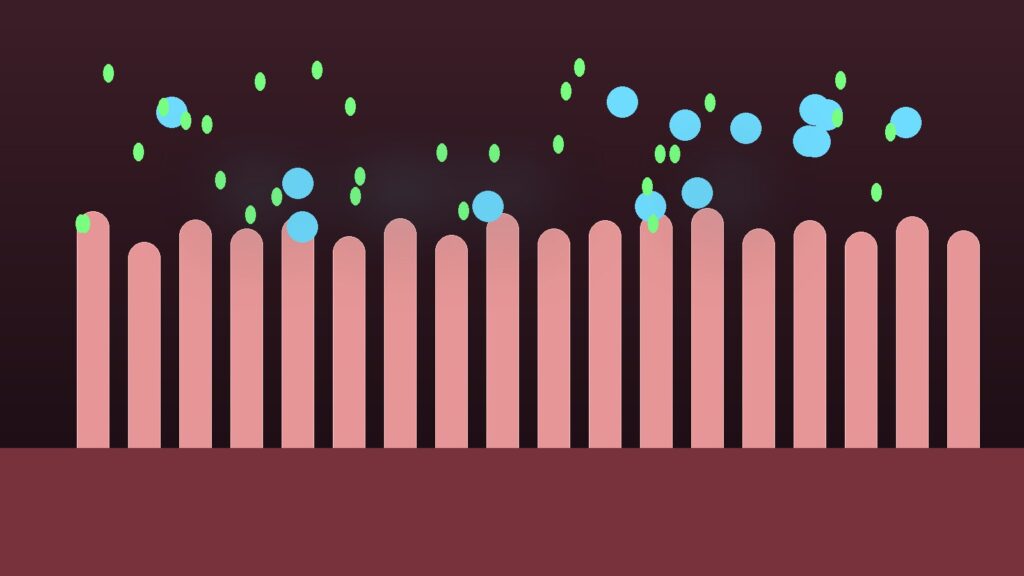
The paper describes engineered barrier models of the human small intestine and colon, with a multilineage epithelium, a mucus layer, an accessible microbial compartment and autologous tissue-resident immune cells. According to the authors, the tissues reproduce region-specific morphology and function and compare with the native organ.
What they found with Salmonella
Using single-cell analysis, the team characterised how human epithelial cells respond to Salmonella Typhimurium, finding distinct gene regulatory networks depending on whether the bacteria stay in the lumen or invade cells. Invaded epithelial cells start an IL-18 signalling axis that activates cytotoxic T cells. The result, they report, is epithelial shedding and barrier disruption: the gut lining sacrifices infected cells and, in doing so, loosens its seal.
That sequence is a hypothesis-generating observation in a human-derived system, not a proven description of disease in patients. The model lets researchers add or remove components, which the authors call modular integration of epithelial, microbial and immune parts.
Limits and claims
This is an institutional description of a model, and we have read the abstract, affiliations and acknowledgements rather than all of the methods. Engineered tissues are expensive, depend on donor material and may not reproduce chronic disease or the full diversity of gut microbes. The paper does not claim a treatment. Whether the platform can predict drug effects better than existing systems is a future test.
The acknowledgements thank a colleague for support with patent filing, so a patent application connected to the work appears to exist. We did not find a published patent document on this run, and a filing is not a granted patent.
Who stands to gain or lose
Drug developers testing treatments for inflammatory bowel disease, infections and gut-targeted immunotherapies stand to gain a human-relevant test bed, and Roche gains an in-house platform. Academic labs using simpler organoids and companies selling animal models could face pressure if the platform proves reproducible and affordable, though that is speculation at this stage.
The first author is Ruben Lopez-Sandoval and the author list includes Matthias Lutolf and Timothy Recaldin. Funding listed includes the Doctoral Programme in Translational Engineering of Biological Systems run between ETH Zurich and F. Hoffmann-La Roche, a European Research Council grant, the German research foundation DFG and the Swiss National Science Foundation including its NCCR AntiResist programme.
Listing check
Roche Pharma Research and Early Development and its Institute of Human Biology are part of the Roche Group, whose parent Roche Holding AG is listed on SIX Swiss Exchange (bearer shares RO, participation certificates ROP, which replaced ROG on 17 March 2026), with an ADR, RHHBY, on the OTCQX market, per Roche’s investor pages; listing of the parent means only indirect exposure to this research. ETH Zurich, University of Basel, EPFL, Osnabruck University and Gustave Roussy are not listed companies. Trading 212 pages could not be checked by automated fetch, so Trading 212 availability is unverified for Roche in any form. Checked 23 November 2026. This is not investment advice.